Elk Antlers vs Deer Antlers for Dogs: Which Is Better?
When it comes to natural dog chews, antlers are one of the most popular options on the market. They’re long-lasting, odor-free, and free from artificial ingredients. But one question dog owners ask again and again is:
Should I choose elk antlers or deer antlers for my dog?
The answer depends on your dog’s size, chewing style, age, and experience level. Below, we break down the differences so you can confidently choose the best option for your dog.
What Makes Antlers Popular Dog Chews?
Antlers are naturally shed by deer, elk, and moose each year, making them a sustainable and ethical chew option. Dog owners choose antlers because they:
Are long-lasting compared to many chews
Don’t splinter like cooked bones
Have little to no odor
Help satisfy a dog’s natural chewing instinct
However, not all antlers are the same—and that’s where the elk vs deer comparison matters.
Elk Antlers for Dogs
Key Characteristics of Elk Antlers
Elk antlers are typically larger, thicker, and slightly softer than deer antlers. They contain a generous amount of marrow, especially when split.
Pros of Elk Antlers:
Softer density than deer antlers
Easier on teeth, especially for beginners
High marrow content (dogs love the taste)
Available in larger sizes for big dogs
Cons of Elk Antlers:
Wear down faster than deer antlers
Can be too soft for extreme power chewers
Larger size may be overwhelming for small dogs
Best Dogs for Elk Antlers
Elk antlers are ideal for:
Puppies (with supervision)
Senior dogs
Moderate chewers
Dogs new to antlers
If you’re unsure where to start, elk antlers are often the safest entry point into antler chews.
Deer Antlers for Dogs
Key Characteristics of Deer Antlers
Deer antlers are generally denser and harder than elk antlers. They tend to last longer but require more chewing strength.
Pros of Deer Antlers:
Harder and more durable
Longer-lasting for heavy chewers
Excellent for experienced antler chewers
Usually smaller and easier to handle
Cons of Deer Antlers:
Harder on teeth if dog chews aggressively
Less marrow exposure unless split
Not ideal for puppies or seniors
Best Dogs for Deer Antlers
Deer antlers work best for:
Adult dogs with strong jaws
Aggressive or power chewers
Dogs already accustomed to antlers
If your dog destroys most chews quickly, deer antlers may hold up better.
Elk vs Deer Antlers: Side-by-Side Comparison
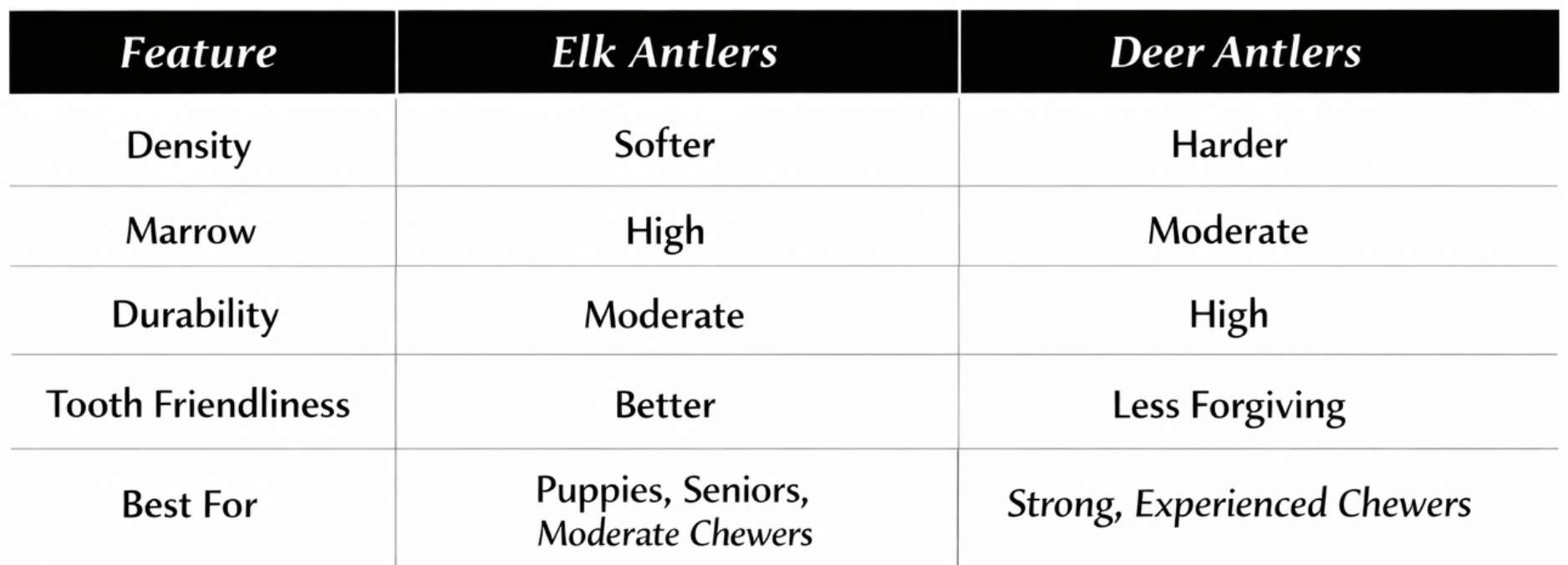
Whole vs Split Antlers (Important Choice)
Regardless of species, how the antler is cut matters.
Split Antlers
Expose marrow immediately
Easier and more enticing
Better for beginners and light chewers
Whole Antlers
Last longer
Require more effort
Better for strong, persistent chewers
Rule of thumb:
New to antlers → start with split elk
Power chewer → consider whole deer
Are Antlers Safe for Dogs?
Antlers are generally safe when used responsibly. Safety depends on:
Choosing the right size
Matching hardness to your dog’s chewing style
Supervising use
Safety Tips:
Always choose an antler larger than your dog’s mouth
Remove the antler if it becomes sharp or worn down
Avoid antlers for dogs with known dental issues
Supervise chewing sessions
No chew is completely risk-free—but proper selection greatly reduces risk.
Which Is Better: Elk or Deer?
Choose Elk Antlers if:
Your dog is young, senior, or new to antlers
You want more marrow exposure
You’re prioritizing dental safety
Choose Deer Antlers if:
Your dog is a strong, aggressive chewer
You want maximum durability
Your dog already chews antlers safely
Many dog owners keep both types on hand and rotate them based on chewing intensity.
Final Verdict
There’s no single “best” antler—only the best antler for your dog.
Elk antlers = softer, beginner-friendly, marrow-rich
Deer antlers = harder, longer-lasting, best for power chewers
Understanding your dog’s chewing behavior is far more important than choosing one species over the other.